
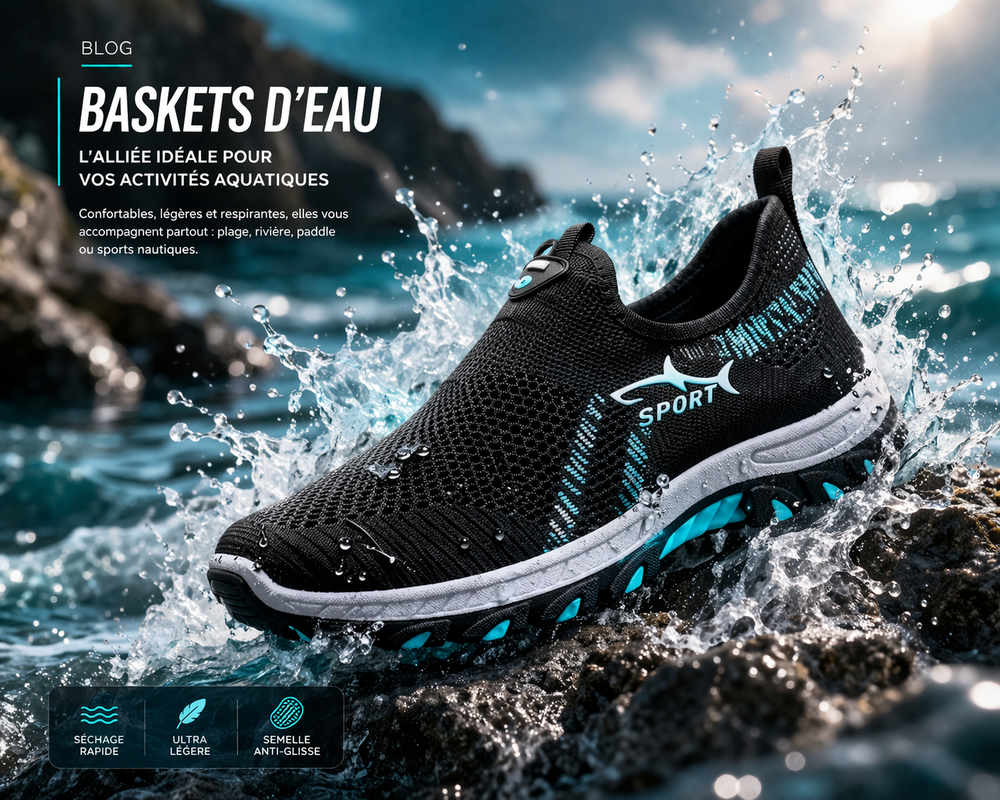
Are you heading to the beach or river, or practicing a water sport? The water shoe has become essential gear to protect your feet while maintaining maximum freedom of movement. But what should you know before buying one? In this article, we answer all the questions you have about water shoes: their usefulness, selection criteria, maintenance, and even a tip for wearing them daily.
What exactly is a water shoe?
A water shoe (or "aquatic shoe") is a lightweight shoe designed to be worn in water or on wet surfaces. It often resembles a reinforced sock with a non-slip sole. Unlike classic flip-flops or slides, it stays securely on the foot, prevents cuts (from shells, rocks), and protects against burns from hot sand or asphalt.
Why should you wear water shoes?
The search intent here is very practical. Here are the 7 benefits that explain their success:
-
Protection against injuries – Sharp rocks, jellyfish, sea urchins, or debris will not cause damage.
-
Non-slip – Walking on a slippery rock or an inflatable paddleboard becomes safer.
-
Thermal comfort – They keep your feet warm in cool water (lake, spring).
-
Quick-drying – Materials (neoprene, mesh) wick away water and dry quickly.
-
Lightweight – Some models weigh less than 150g per foot.
-
Versatility – Perfect for kayaking, canyoning, sailing, surfing, coastal hiking.
-
Hygiene – Avoid fungi or warts in swimming pools or aquatic centers.
What criteria for choosing the right water shoe?
Not all models are created equal. Here's what you need to check before buying:
The sole
-
Thin sole (2-3 mm): better contact sensation, ideal for aquatic yoga or swimming.
-
Thick sole (5-8 mm): essential for walking on pebbles or rocks. Look for "chevron" or "fish" patterns for grip.
The material
-
Neoprene: warm, elastic, protective (perfect for autumn).
-
Mesh fabric + EVA: very breathable, dries in 20 minutes, ideal for summer.
-
Leather or rigid synthetic: not recommended (too heavy, dries poorly).
The closure system
-
Elastic or quick lace (knot-free): easy to put on.
-
Velcro: adjustable, but can catch on sand.
-
No fastening (sock-type): perfect for swimming, less good for walking.
Foot coverage
-
High-top (ankle covered): protects against sand and pebbles.
-
Low-cut: lighter, but beware of gravel getting in.
How to care for your water shoes?
Poor maintenance quickly makes them unusable (odors, detached sole). Follow these 3 rules:
-
Rinse with fresh water after each use in the sea or pool (salt + chlorine = enemy).
-
Hand wash with mild soap (or machine wash at 30°C on a delicate cycle, no spinning).
-
Air dry – never on a radiator (neoprene stretches) or in direct sunlight (discoloration).
Tip: slip newspaper inside to absorb moisture faster.
❗ An exceptional pair of water shoes in our store
Looking for a reliable, comfortable, and immediately available water shoe? We have just what you need.
Our unique "AquaGrip Pro" model has been designed to meet all the criteria mentioned above:
-
3D non-slip rubber sole – perfect grip on wet rocks and paddleboards.
-
Ultra-airy mesh upper + flexible neoprene around the ankle – comfort, no rubbing.
-
Fast elastic lace closure – put on or take off in 2 seconds.
-
Removable and washable insole – no more bad odors.
-
Express delivery (limited stock to 1 pair per size – yes, we only have one reference for now, so don't delay!).
👉 Available now in our store – Aquatic Sneakers. Whether for a kayaking trip, a beach day with the kids, or an aquatic hike, this water shoe will go everywhere with you without slipping off your foot.

Frequently Asked Questions (FAQ)
Can water shoes be worn all day?
Yes, provided they are well-fitted and breathable. Avoid 100% neoprene models in hot weather (risk of maceration).
Are water shoes suitable for children?
Absolutely, it's even recommended to protect their delicate feet on rocky shorelines. Buy one size up for growth.
How do I know if my water shoe is good quality?
Turn it towards you: the sole should be flexible but resistant, the seams doubled, and the heel slightly padded.
Can I use them for running on the beach?
For a light jog on dry sand, yes. For trail running on rocks, prefer a more rigid aquatic trail shoe.
Conclusion
The water shoe is no longer a gadget: it is a real piece of protective and comfortable equipment for all lovers of water activities. By knowing the right criteria (sole, material, support) and maintenance rules, you will make a lasting purchase.
And if you want a turnkey solution, try our unique model – it combines everything we've detailed in this guide. Only one pair available, so don't wait to try it!
Did you like this article? Share it or leave a comment if you have other questions about water shoes.






Leave a comment
All comments are moderated before being published.
This site is protected by hCaptcha and the hCaptcha Privacy Policy and Terms of Service apply.